Politics & Power
Uganda Under Museveni: Four Decades of Rule
Nearly four decades after taking power, President Yoweri Museveni remains the defining figure in Ugandan politics. Supporters credit his leadership with restoring stability and driving economic reforms, while critics argue that prolonged rule has weakened democratic institutions. As Uganda enters another political term, debate continues over the country’s future, governance and democratic transition.

Published
7 months agoon
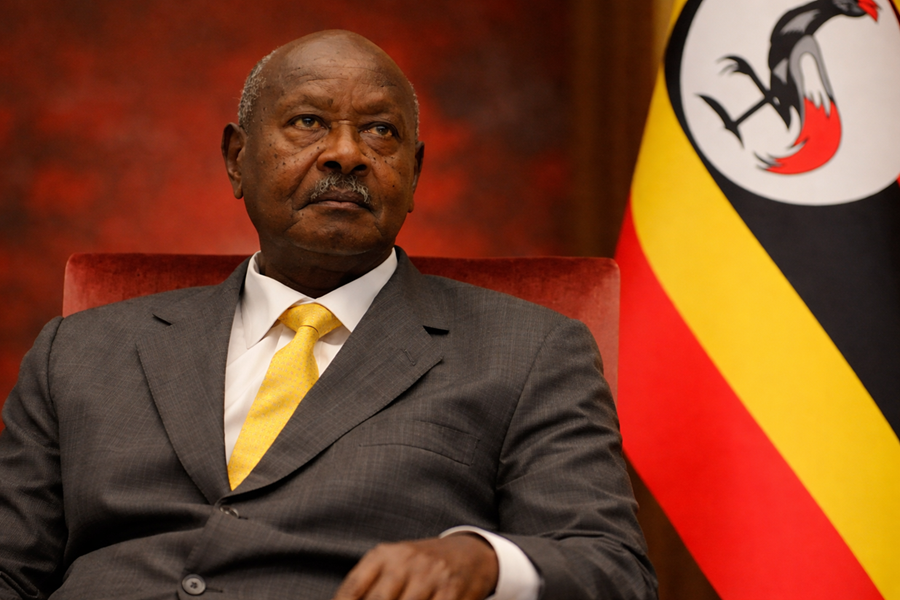
Uganda’s political landscape remains dominated by President Yoweri Kaguta Museveni, who has ruled the country since 1986 and continues to shape its political future amid growing domestic and international scrutiny.
Extended Rule and Control
Museveni’s long tenure is rooted in his reputation as a stabilizing force following decades of pre-1986 unrest, and his leadership is credited by supporters with bringing relative peace and growth. His National Resistance Movement (NRM) has built deep institutional networks and broad support, helping secure his position over decades.
However, critics argue that this extended rule has come at the expense of democratic norms, pointing to constitutional changes — including the removal of age and term limits — that have enabled successive reelection bids.
Contentious 2026 Election and Suppression of Dissent
In Uganda’s January 2026 election, Museveni won a seventh term amid allegations of irregularities. Official results showed him with a decisive majority, but opposition leaders — most prominently Bobi Wine (Robert Kyagulanyi Ssentamu) — rejected the outcome, alleging fraud, ballot stuffing, and violent crackdowns on supporters.
Security forces reportedly used nationwide internet blackouts and heavy policing to restrict opposition activity, drawing condemnation from human rights groups. Museveni’s government has denied these claims, defending security measures as necessary to maintain stability.
Opposition Under Pressure
Museveni’s opponents face intense pressure. Bobi Wine has complained of threats, persecution, and even enforced disappearances of his supporters, highlighting the risks of opposition politics in Uganda.
Veteran opposition figure Kizza Besigye remains imprisoned on treason charges widely seen as politically motivated, although he has continued to exert influence by launching a new political party from detention.
Internal Politics and Power Dynamics
Despite his advanced age, Museveni continues active political engagement, travelling the country to rally support for the NRM and emphasising unity and development. He has also met with regional leaders to promote cooperation on socio-economic issues, a move framed as broadening his political appeal beyond raw power politics.
At the same time, Museveni has used speeches to national institutions and the army to stress the importance of unity over tribal or identity politics — a theme that critics argue also serves to justify the regime’s centralized control.
What This Means for Uganda’s Future
Uganda’s political future remains at a crossroads:
- Institutional dominance: Museveni’s long rule has deeply entrenched the NRM within state systems, making rapid political change difficult without substantial reform.
- Youth and opposition energy: With a majority-young population and persistent opposition activism, there is continued pressure for political renewal.
- International scrutiny: Western partners have criticized electoral irregularities and rights abuses, but strategic partnerships and regional stability concerns complicate external pressure.
Balancing stability, democratic norms, and popular aspirations will be central to Uganda’s political evolution in the years ahead.

You may like


ECOWAS at 50: Can West Africa’s Most Ambitious Regional Project Survive a New Era of Division?
-
Undocumented Migration in Southern Africa: Why the Debate Extends Far Beyond Borders
-
Rwanda: Three Decades After the Genocide
-
The Life and Legacy of Kenneth Kaunda
-
How Global Conflicts Affect African Economies
-
How SADC Shapes Southern Africa