Analysis
Undocumented Migration in Southern Africa: Why the Debate Extends Far Beyond Borders
Migration has long been part of Southern Africa’s history, but rising unemployment, economic inequality and political tensions have placed undocumented migration at the centre of public debate. As governments seek to balance border security with human rights, experts say lasting solutions will require regional cooperation and efforts to address the underlying economic and social factors driving migration.

Published
3 months agoon
Migration has shaped Southern Africa for generations.
Long before modern borders were established, people moved across the region in search of grazing land, trade opportunities and employment. During the colonial era, migrant labour became a defining feature of the regional economy, with workers travelling from countries such as Lesotho, Mozambique, Malawi, Zambia and Zimbabwe to South Africa’s mines and commercial industries.
Today, cross-border movement remains an important part of Southern Africa’s economic landscape. Yet growing concerns over undocumented migration have turned one of the region’s oldest patterns of movement into one of its most divisive political issues.
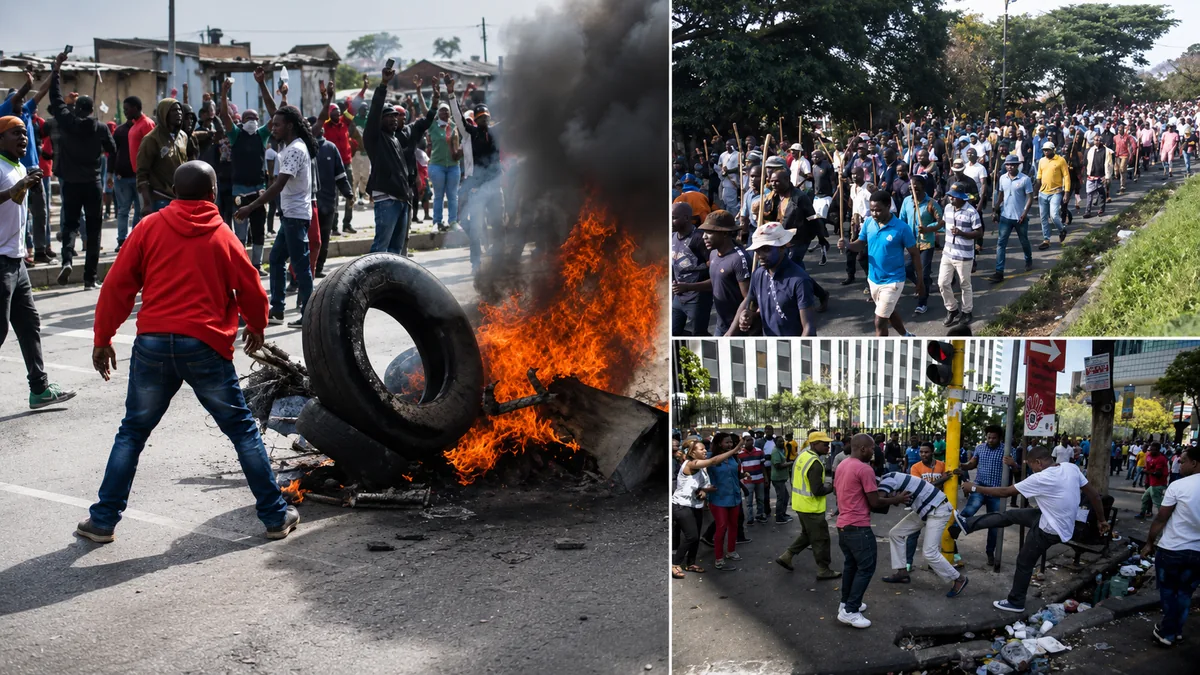
Across South Africa in particular, frustration over unemployment, rising living costs and pressure on public services has fuelled increasingly heated debates about immigration. Protests targeting foreign-owned businesses and periodic outbreaks of xenophobic violence have highlighted the depth of public concern, drawing condemnation from governments, regional organisations and human rights groups.
The question facing policymakers is whether undocumented migration is the primary cause of these challenges—or whether it has become a symbol of broader economic frustrations.
A Complex Issue With No Single Cause
Migration experts caution against viewing irregular migration through a single lens.
According to the International Organization for Migration (IOM), people leave their home countries for many different reasons, including conflict, political instability, unemployment, environmental pressures and the search for better economic opportunities. In many cases, migration reflects conditions that extend beyond the control of individual migrants.
Southern Africa illustrates this complexity. Economic differences between neighbouring countries, together with established family and labour networks, continue to encourage movement across borders despite stricter immigration controls.
Researchers note that tightening border enforcement alone rarely eliminates irregular migration if the underlying economic incentives remain unchanged.
Public Frustration and Economic Reality
South Africa faces one of the highest unemployment rates in the world, particularly among young people. At the same time, many communities continue to struggle with poverty, housing shortages, pressure on healthcare services and slow economic growth.
Against this backdrop, undocumented migrants are often accused of taking jobs, placing additional strain on public services or contributing to crime.
However, economists and migration researchers caution that these issues are influenced by a wide range of structural factors, including weak economic growth, skills shortages, governance challenges and long-standing inequality.
The World Bank has repeatedly noted that South Africa’s unemployment crisis has deep structural causes that cannot be explained by migration alone.
This does not diminish the importance of effective immigration management. Rather, it suggests that addressing migration without tackling broader economic challenges is unlikely to resolve public frustration.
The Human Dimension
Behind every migration statistic is an individual story.
Some migrants are skilled professionals seeking employment opportunities. Others are entrepreneurs operating small businesses, while many leave their home countries because of economic hardship, insecurity or humanitarian crises.
The United Nations High Commissioner for Refugees (UNHCR) distinguishes between refugees, asylum seekers and economic migrants, emphasising that each group is protected by different legal frameworks under international law.
Recognising these distinctions is important for developing fair and effective migration policies.
A Regional Challenge
Migration in Southern Africa does not affect one country alone.
Trade, investment and labour markets are increasingly interconnected, meaning instability in one country can quickly influence migration patterns across the region.
The Southern African Development Community (SADC) and the African Union have long promoted regional cooperation as a means of encouraging economic integration while improving the management of cross-border movement.
Analysts argue that stronger collaboration on labour migration, border management, digital identity systems and information sharing could reduce irregular migration while protecting legitimate travel and trade.
Balancing Security and Human Rights
Every sovereign state has the right to regulate its borders and enforce immigration laws.
At the same time, international human rights principles require that migrants—regardless of their legal status—are treated with dignity and protected from violence, discrimination and arbitrary treatment.
Finding that balance remains one of the region’s greatest policy challenges.
Governments must strengthen immigration systems while ensuring that public debate does not equate undocumented migration with criminality or encourage hostility towards entire communities.
Looking Ahead
Few experts believe migration will disappear from Southern Africa in the foreseeable future.
Population growth, economic disparities, climate change and regional instability are likely to continue influencing movement across borders for years to come.
The question is therefore not whether migration will continue, but how governments can manage it more effectively.
That will require investment in border administration, employment creation, regional cooperation and economic development across Southern Africa—not only to regulate migration but also to address the conditions that drive people to leave their homes in the first place.
Ultimately, the debate over undocumented migration is about more than border control. It reflects wider questions of governance, economic opportunity, regional integration and social cohesion.
The choices made today will help determine whether migration becomes an enduring source of division—or a challenge managed through cooperation, evidence-based policy and respect for human dignity.