Politics & Power
Rwanda: Three Decades After the Genocide
Thirty years after the 1994 genocide against the Tutsi, Rwanda has emerged as one of Africa’s most remarkable examples of post-conflict reconstruction. Under President Paul Kagame, the country has achieved significant economic and institutional progress, while continuing to face international debate over governance, political freedoms and the future of its development model.

Published
4 months agoon
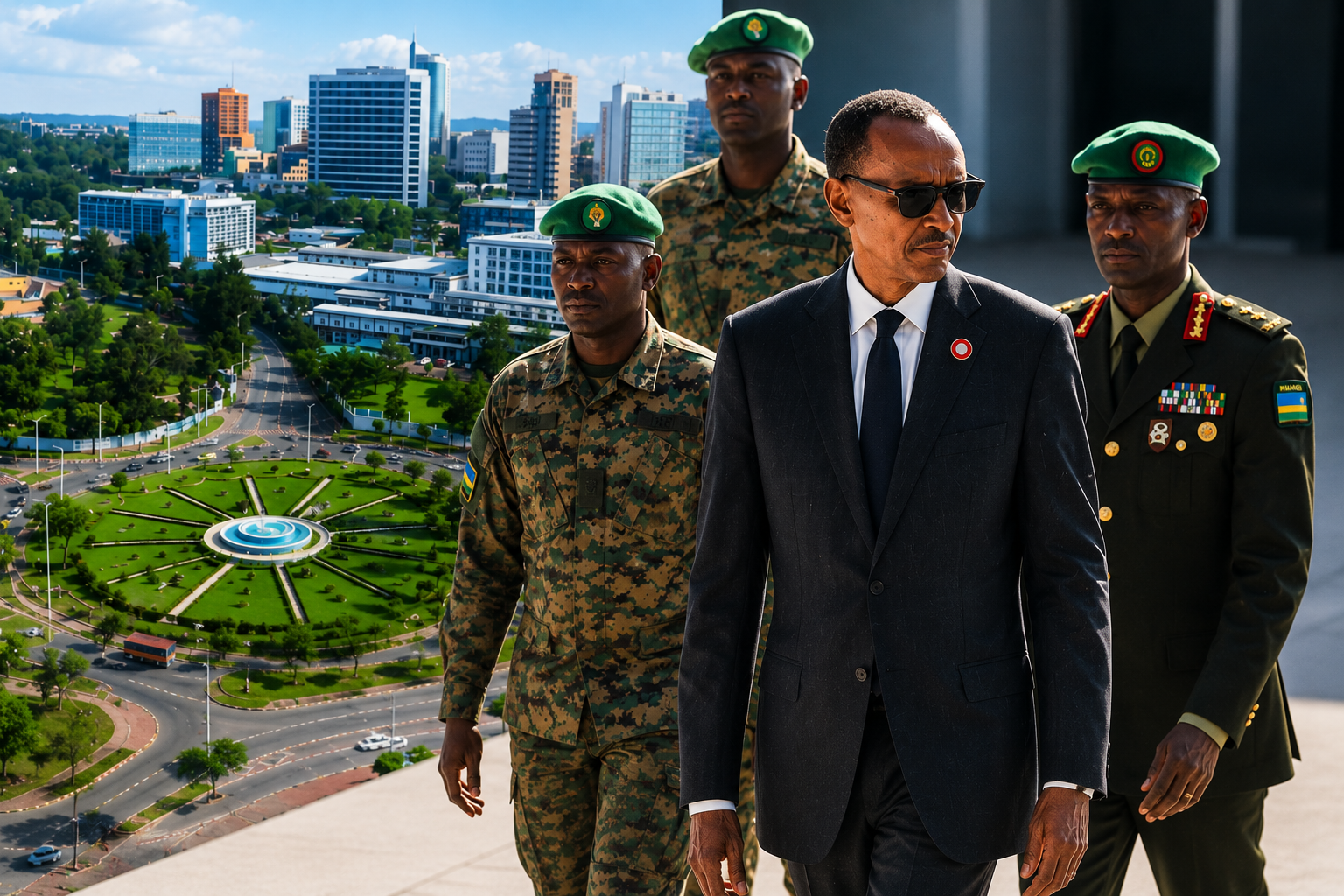
How Paul Kagame’s Leadership Transformed a Nation—and Why Debate Continues
Thirty years ago, Rwanda was synonymous with one of the darkest chapters in modern history. In just 100 days during the 1994 genocide against the Tutsi, an estimated 800,000 people were killed, communities were torn apart, and much of the country’s administrative and economic infrastructure collapsed.
Today, visitors arriving in Kigali encounter a strikingly different nation. Clean streets, expanding technology hubs, improved healthcare, modern infrastructure and a reputation for effective public administration have transformed Rwanda into one of Africa’s most closely watched development stories.
The country’s remarkable recovery has been shaped largely under the leadership of President Paul Kagame, who assumed the presidency in 2000 after leading the Rwandan Patriotic Front (RPF), the rebel movement that ended the genocide. His government has earned international recognition for restoring stability, rebuilding institutions and driving economic growth. At the same time, international human rights organisations continue to raise concerns about political freedoms and restrictions on opposition parties.
The result is a country widely praised for its development achievements while remaining at the centre of an ongoing debate about governance and democracy.
Rebuilding After One of History’s Worst Atrocities
When the genocide ended in July 1994, Rwanda faced challenges unlike those confronting most post-conflict societies.
Millions of people had been displaced, public institutions had ceased functioning and the economy was severely damaged. Schools, hospitals and government offices required rebuilding, while survivors and returning refugees faced the enormous task of rebuilding communities fractured by violence.
According to the United Nations, reconstruction involved far more than restoring physical infrastructure. It required rebuilding public trust, strengthening institutions and preventing future ethnic violence.
The new government adopted a policy centred on national unity, arguing that reducing ethnic divisions would be essential to ensuring lasting peace.
Governance Built Around Long-Term Planning
Since becoming president, Kagame has consistently emphasised state efficiency, accountability and long-term development planning.
Policies aimed at reducing corruption, improving public administration and expanding access to digital government services have helped strengthen Rwanda’s institutions. Transparency International has consistently ranked Rwanda among the least corrupt countries in Africa, reflecting improvements in public-sector governance.
The government’s long-term development strategy, Vision 2050, sets ambitious goals for transforming Rwanda into an upper-middle-income economy through investment in education, healthcare, technology and private enterprise.
Supporters argue that disciplined implementation has enabled Rwanda to achieve results more quickly than many countries with similar levels of development.
Justice and National Reconciliation
Healing the wounds left by genocide presented one of the country’s greatest challenges.
With conventional courts overwhelmed by hundreds of thousands of genocide-related cases, Rwanda established the Gacaca court system—a community-based justice process intended to promote accountability while encouraging reconciliation at the local level.
The process received international recognition for resolving an extraordinary number of cases within a relatively short period. At the same time, organisations including Human Rights Watch raised concerns regarding legal safeguards and procedural fairness in some proceedings.
Alongside the justice process, Rwanda invested in survivor assistance programmes, genocide memorials and national remembrance initiatives designed to preserve historical memory while promoting reconciliation.
Annual commemorations continue to play an important role in public life, reinforcing the country’s commitment to ensuring that the events of 1994 are neither forgotten nor repeated.
Building an Economy Beyond Natural Resources
Unlike many African economies, Rwanda possesses relatively limited mineral and energy resources.
Recognising this constraint, policymakers focused on developing sectors capable of generating long-term growth, including tourism, financial services, information technology, logistics and modern agriculture.
According to the World Bank, Rwanda has recorded sustained economic growth over much of the past two decades, despite temporary setbacks during the COVID-19 pandemic. Investments in rural development, infrastructure and agricultural productivity have also contributed to reductions in poverty.
Tourism has become one of Rwanda’s most valuable foreign-exchange earners. Mountain gorilla conservation, national parks and international conferences have helped position Kigali as an important destination for both leisure and business travel.
Investing in Education, Health and Technology
Human capital has remained central to Rwanda’s development strategy.
Government investment has expanded access to education while increasing support for technical and vocational training designed to prepare young people for a changing economy.
Healthcare has also undergone significant transformation. Community-based health insurance has expanded access to medical services, while improvements in maternal healthcare, childhood immunisation and disease prevention have contributed to better public health outcomes.
Technology has become another defining feature of Rwanda’s development model.
Projects such as Kigali Innovation City, together with nationwide investments in digital infrastructure, aim to position Rwanda as a regional centre for innovation and entrepreneurship.
The country has also attracted international attention through its partnership with Zipline, whose drone delivery network transports blood and essential medical supplies to remote healthcare facilities, demonstrating how emerging technologies can address practical development challenges.
Growing Influence Beyond Rwanda’s Borders
Rwanda has increasingly positioned itself as an active participant in regional and international affairs.
The country contributes personnel to United Nations and African Union peacekeeping missions and plays an active role within the East African Community (EAC) and the African Union, where Kagame previously served as Chairperson.
Kigali has also emerged as a preferred venue for international conferences, reflecting the country’s reputation for security, efficient organisation and modern infrastructure.
A Development Model That Divides Opinion
Despite widespread recognition of Rwanda’s development achievements, Kagame’s leadership continues to generate debate.
Supporters point to political stability, effective governance, economic growth and low levels of corruption as evidence that strong state institutions have enabled Rwanda to recover from one of history’s worst humanitarian disasters.
Critics, including Amnesty International and Human Rights Watch, have expressed concerns about restrictions on political opposition, media freedom and freedom of expression. The Rwandan government rejects these criticisms, arguing that national unity, security and stability remain essential priorities in a country still shaped by the legacy of genocide.
These contrasting perspectives continue to shape international discussion about Rwanda’s political model.
Challenges for the Future
While Rwanda’s transformation has been widely recognised, important challenges remain.
Creating sufficient employment opportunities for a young and growing population, expanding private-sector investment, adapting to climate change and strengthening regional economic integration will be critical to sustaining future growth.
Regional instability in parts of the eastern Democratic Republic of the Congo also continues to influence Rwanda’s security environment and diplomatic relations.
Addressing these issues while maintaining economic momentum will be among the government’s most significant tests in the years ahead.
Looking Beyond the Recovery
Rwanda’s experience demonstrates that rebuilding after conflict requires far more than reconstructing roads and public buildings. It also involves rebuilding institutions, restoring public confidence and creating economic opportunities capable of sustaining long-term peace.
Three decades after the genocide, Rwanda has become one of Africa’s most remarkable examples of post-conflict reconstruction. At the same time, ongoing debates about governance and political freedoms ensure that its development model remains closely examined by policymakers, scholars and international observers alike.
Whether viewed primarily as a model of effective state-building or as a country balancing rapid development with complex political questions, Rwanda’s transformation under Paul Kagame will continue to shape conversations about leadership, reconstruction and development across Africa for years to come.

You may like


ECOWAS at 50: Can West Africa’s Most Ambitious Regional Project Survive a New Era of Division?
-
Undocumented Migration in Southern Africa: Why the Debate Extends Far Beyond Borders
-
The Life and Legacy of Kenneth Kaunda
-
How Global Conflicts Affect African Economies
-
How SADC Shapes Southern Africa
-
How South Africa Is Rethinking Urban Housing