Analysis
Inside the Dinka Marriage Tradition

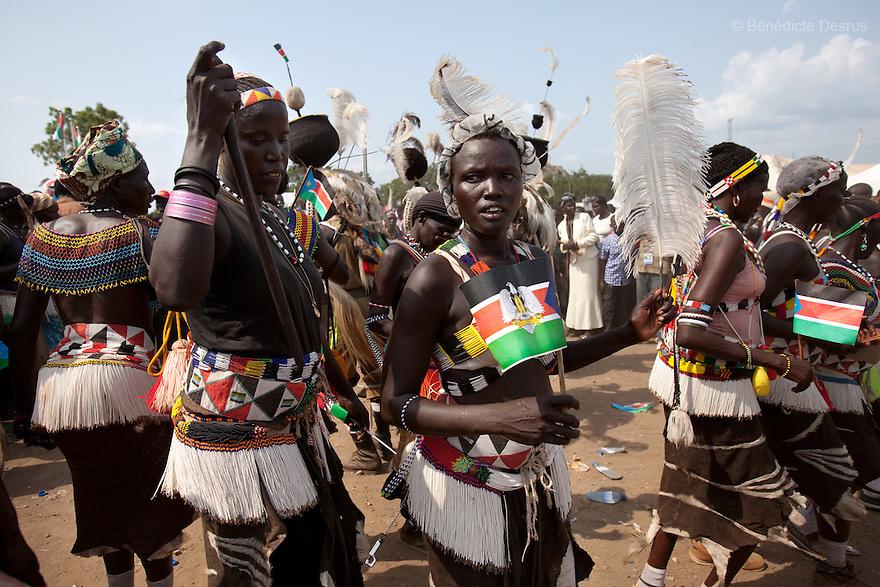
For centuries, marriage has been one of the most important institutions among the Dinka people of South Sudan. More than a union between two individuals, it is a bond that connects families, strengthens communities and preserves cultural traditions that have been handed down through generations.
One of the best-known aspects of Dinka marriage is the role of cattle. Anthropologist Francis Mading Deng, whose research on Dinka society remains among the most influential, explains that cattle represent far more than wealth. They symbolise kinship, social responsibility and the creation of lasting ties between two families. While the number of cattle exchanged varies from one family to another, bridewealth remains a significant part of many traditional marriages.

Beyond the exchange of cattle, some Dinka communities observe a lesser-known custom known as Anyuuc, often translated as “Generous Welcoming.” According to community accounts and research into South Sudanese customary law, the tradition allows a newly married bride to spend an extended period settling into her new home before taking on the full responsibilities of managing the household.
During this time, the bride is encouraged to learn the customs, values and expectations of her husband’s family. Rather than immediately beginning domestic work, she is given an opportunity to understand how the household functions and to build relationships with members of her new family.
Family members also play an important role in helping her adjust. In communities where the custom is practised, the husband’s sisters or other female relatives may temporarily carry out daily chores such as cooking, fetching water, collecting firewood and washing utensils. The arrangement reflects the communal nature of Dinka family life, where marriage is regarded as the responsibility of the wider family rather than the couple alone.
Some community traditions describe this welcoming period as lasting for as long as four years, although researchers caution that the duration and the way the custom is observed differ from one Dinka community to another. A 2024 study by South Sudanese researcher Ajak Deng Gabriel notes that customary marriage practices are not identical across the country’s regions and are often shaped by local traditions and decisions made by family elders.
According to oral traditions shared within some communities, the end of the Anyuuc period is marked by a celebration known as Thaat. The ceremony reportedly involves a communal feast and the slaughter of livestock before the bride symbolically begins preparing meals for her husband’s household. Although details vary between communities, the celebration is widely described as marking the bride’s full integration into family life.
Some traditional accounts also suggest that if a husband seriously mistreats his wife during this introductory period, the marriage may end under customary law without the automatic return of the bridewealth. Legal experts, however, emphasise that such matters are handled according to local customary practices, and no single rule applies across all Dinka communities.
Anthropologist Godfrey Lienhardt, who conducted extensive fieldwork among the Dinka during the twentieth century, observed that marriage cannot be understood simply through ceremonies or customs. Instead, he argued that it forms part of a much broader system linking family, spirituality, cattle and community life.
Today, Dinka marriage traditions continue to evolve. Education, urbanisation, Christianity, migration and modern legal systems have influenced how many families approach marriage. While some customs remain deeply valued, others have been adapted to suit contemporary life, particularly in towns and cities.
What has remained remarkably consistent is the central role of marriage in bringing families together. Whether celebrated in rural cattle camps or modern urban communities, Dinka weddings continue to reflect a culture that places strong emphasis on kinship, mutual support and respect for tradition.