In Focus
Why Pentecostal Christianity Has Grown So Rapidly Across Africa
Pentecostal Christianity has become one of the fastest-growing religious movements in Africa, influencing worship, education, media and public life across the continent. Historians say its remarkable growth reflects a combination of missionary activity, African leadership, rapid social change and a message that resonated with millions seeking hope, healing and spiritual renewal.

Published
4 months agoon
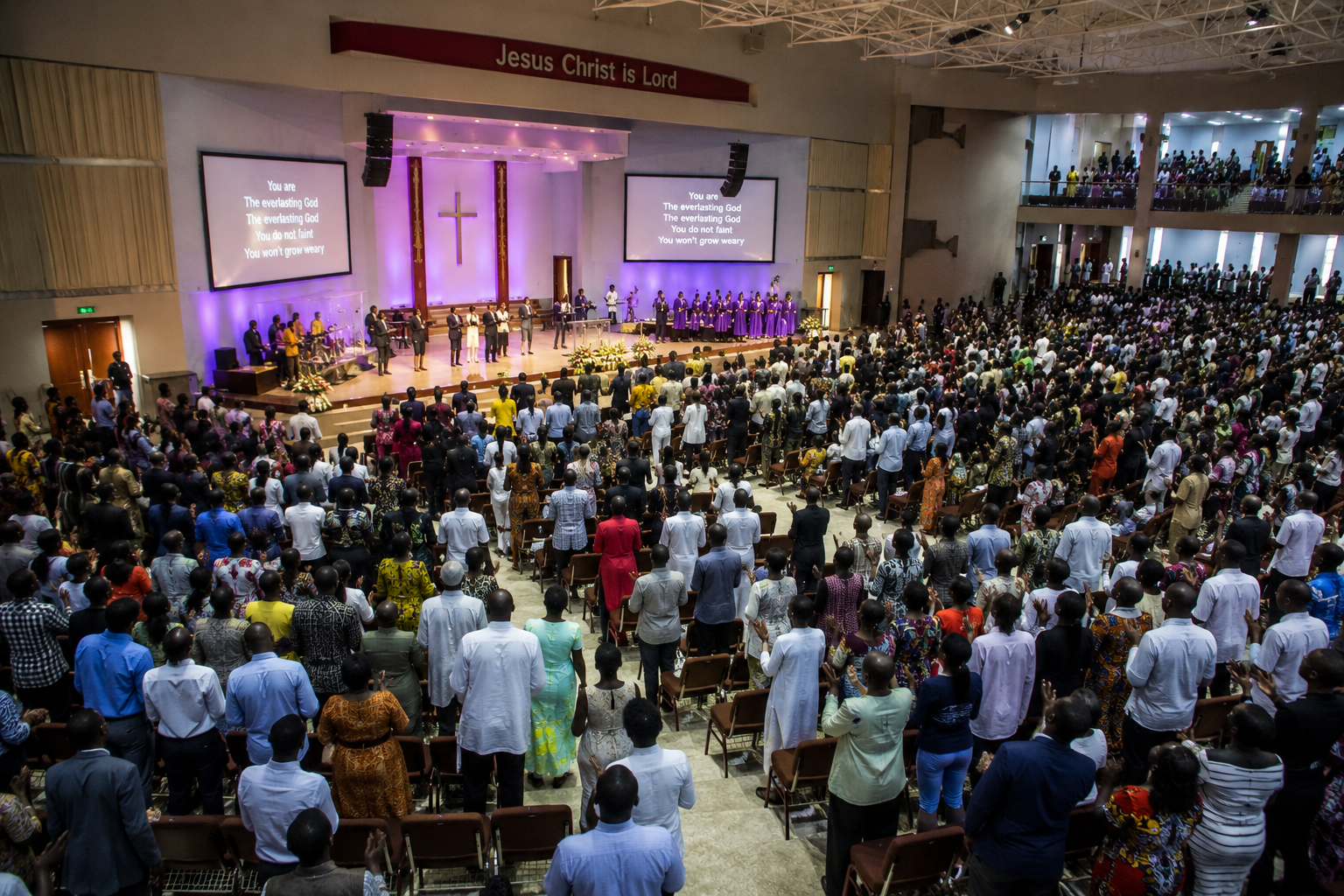
Few religious movements have transformed Africa’s religious landscape as dramatically as Pentecostal Christianity.
Once represented mainly by small revival gatherings and missionary congregations, Pentecostal churches today are among the continent’s fastest-growing Christian communities. Their influence now extends far beyond Sunday worship, shaping education, media, politics, business and social life in many African countries.
Researchers estimate that tens of millions of Africans now identify with Pentecostal or Charismatic churches, making the movement one of the defining developments in modern African Christianity.
The question is: why has Pentecostalism grown so rapidly?
From a Global Revival to an African Movement
Most historians trace the origins of modern Pentecostalism to the Azusa Street Revival in Los Angeles between 1906 and 1909. The revival emphasised the work of the Holy Spirit, spiritual gifts, healing and vibrant worship, and quickly influenced Christian communities around the world.
Missionaries associated with Pentecostal movements later introduced these teachings to different parts of Africa during the early twentieth century. Churches gradually emerged in countries including South Africa, Nigeria, Ghana, Kenya and Zimbabwe, although the movement expanded at different times and in different ways across the continent.
Church historian Allan Anderson, one of the leading scholars of global Pentecostalism, argues that while missionary activity played an important role, African Christians themselves became the principal architects of the movement’s long-term growth.
Why the Message Resonated
Many scholars believe Pentecostal Christianity appealed to African communities because it addressed questions that people considered deeply relevant to everyday life.
Across many societies, belief in spiritual realities—including healing, dreams, prophecy and the existence of unseen forces—had long formed part of religious and cultural life.
Rather than focusing primarily on abstract theology, Pentecostal churches emphasised prayer, personal spiritual experience, healing and the expectation that God remains actively involved in daily life.
Researchers caution, however, that this should not be understood as a simple continuation of traditional African religions. Instead, many describe Pentecostalism as a distinctly Christian movement that developed in dialogue with African social and cultural realities.
A Faith That Expanded During Rapid Social Change
The second half of the twentieth century brought profound transformation across Africa.
Independence movements, rapid urbanisation, economic uncertainty and population growth reshaped communities throughout the continent. Millions of people moved from rural areas into expanding towns and cities, often leaving behind traditional support networks.
Sociologists studying African Christianity suggest that Pentecostal churches offered more than religious services. They also provided new communities, social support, leadership opportunities and a sense of hope during periods of rapid change.
This combination helped many churches grow quickly in urban centres.
Healing, Prayer and Personal Transformation
Healing ministries have become one of Pentecostalism’s most recognisable features.
Many churches teach that prayer plays an important role in physical, emotional and spiritual well-being, while also encouraging members to seek appropriate medical care where necessary.
Alongside healing, many Pentecostal congregations emphasise personal transformation—encouraging members to overcome addiction, strengthen family relationships, pursue education and develop disciplined lifestyles.
Scholars note that these practical messages often resonate strongly with people seeking stability and hope in challenging circumstances.
African Leadership Shaped the Movement
One of the most significant developments in Pentecostal history has been the rise of African leadership.
Although missionaries introduced many early Pentecostal teachings, African pastors, evangelists and theologians increasingly adapted the movement to local languages, cultures and social realities.
Music, worship styles, preaching and community outreach gradually reflected African contexts rather than overseas traditions.
Professor Lamin Sanneh, a noted historian of Christianity in Africa, argued that Christianity has repeatedly taken on local cultural expression as it spreads into new societies. Pentecostalism in Africa illustrates this process particularly clearly.
Influence Beyond the Church
Today, Pentecostal churches influence many aspects of public life.
Across the continent, churches operate schools, universities, hospitals, radio stations, television networks and humanitarian programmes. Some pastors have also become influential public figures whose views shape national conversations on ethics, politics and development.
This growing influence has attracted both praise and criticism.
Supporters point to the movement’s contribution to education, charitable work and community development. Critics, meanwhile, have questioned aspects of prosperity teaching, financial accountability and the increasing political influence of some religious leaders.
These debates continue among theologians, scholars and church communities themselves.
A Movement Still Evolving
Historians generally agree that Pentecostalism’s growth cannot be explained by a single factor.
Missionary activity, African leadership, urbanisation, demographic change, cultural adaptation and a focus on personal spiritual experience have all contributed to its expansion.
As Christianity continues evolving across Africa, Pentecostal churches remain among its most dynamic expressions.
More than a century after the Azusa Street Revival, the movement has become deeply rooted across the continent—not simply as an imported tradition, but as a form of Christianity that millions of African believers have shaped through their own history, cultures and experiences.