Politics & Power
Zambia Under Hakainde Hichilema: Reforming an Economy Under Pressure
Since taking office in 2021, President Hakainde Hichilema has pursued debt restructuring, fiscal reforms and investment-led growth to stabilise Zambia’s economy after a sovereign debt default. While international institutions have welcomed progress toward macroeconomic recovery, the government continues to face the challenge of translating economic reforms into improved living standards for ordinary Zambians.

Published
7 months agoon
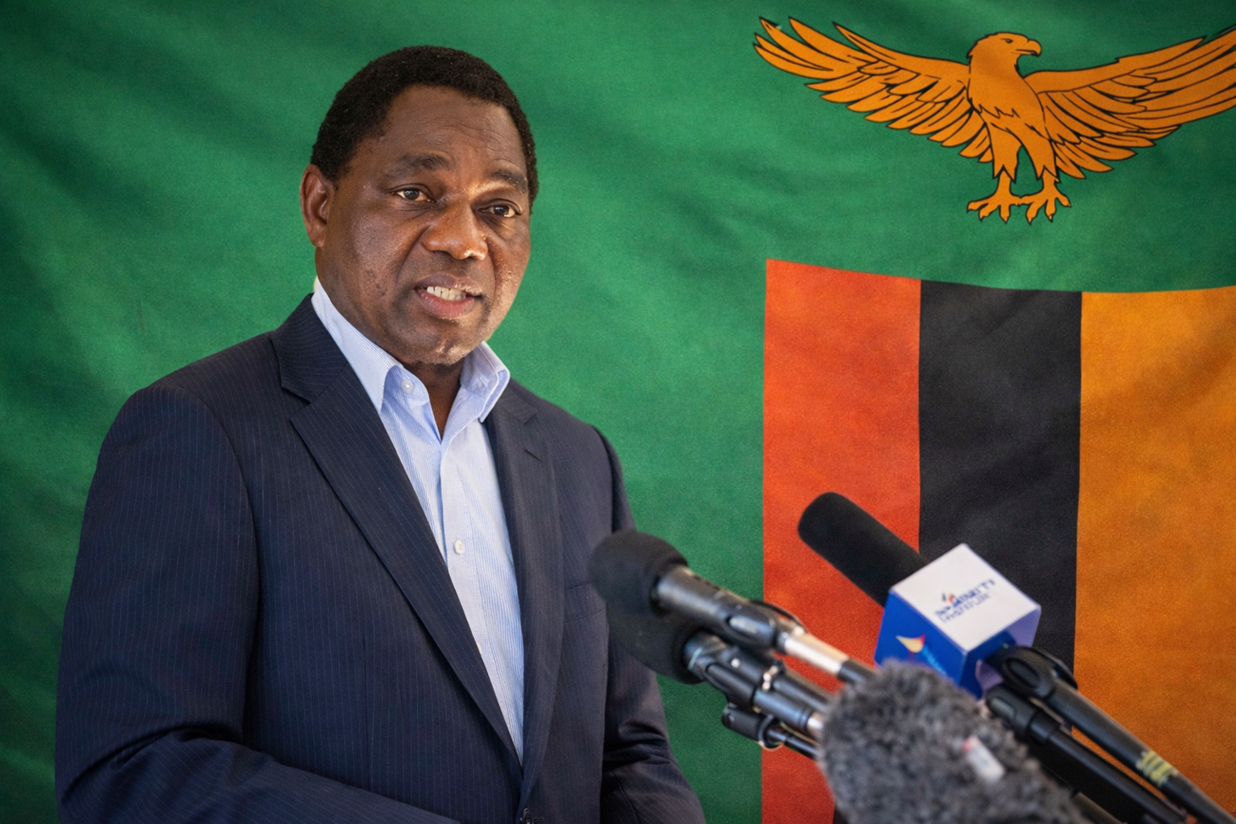
When President Hakainde Hichilema assumed office in August 2021, he inherited one of the most challenging economic environments in Zambia’s recent history.
The country was emerging from its first sovereign debt default, inflation had eroded household purchasing power, foreign exchange reserves were under pressure and investor confidence had weakened. Public debt had reached levels that limited the government’s ability to finance development while maintaining essential public services.
Since then, Hichilema’s administration has focused on restoring macroeconomic stability, restructuring debt and rebuilding confidence among investors and international development partners.
Supporters view these reforms as laying the foundation for long-term economic recovery, while critics argue that many Zambians continue to face high living costs and have yet to experience significant improvements in their daily lives.
An Economy Facing Major Challenges
When the new administration took office, Zambia’s economy was still recovering from a combination of falling commodity prices, the COVID-19 pandemic and rising public debt.
In 2020, Zambia became the first African country during the pandemic to default on its sovereign debt, highlighting growing fiscal pressures.
According to the International Monetary Fund (IMF), restoring debt sustainability became essential for rebuilding investor confidence, improving access to international finance and supporting long-term economic growth.
The government’s immediate priority became stabilising public finances while protecting essential social services.
Working with International Partners
One of the administration’s earliest policy decisions was to renew cooperation with international financial institutions.
In 2022, the IMF approved a US$1.3 billion Extended Credit Facility, designed to support economic reforms, strengthen fiscal discipline and improve public financial management.
The programme also aimed to encourage wider structural reforms intended to improve transparency, strengthen governance and create conditions for sustainable private-sector investment.
Officials argued that restoring confidence among international lenders was necessary if Zambia was to regain access to affordable financing.
Debt Restructuring
Debt restructuring has become one of the defining features of Hichilema’s economic programme.
In 2023, Zambia reached an agreement with its official bilateral creditors under the G20 Common Framework, restructuring approximately US$6.3 billion in public debt.
The agreement extended repayment periods and reduced immediate debt-servicing obligations, allowing greater fiscal flexibility.
Negotiations with commercial creditors have continued as part of a broader effort to restore long-term debt sustainability.
International financial institutions have closely monitored Zambia’s progress, viewing the country as an important test case for sovereign debt restructuring in developing economies.
Strengthening Local Development
Domestically, one of the government’s most visible reforms has been the expansion of the Constituency Development Fund (CDF).
Funding allocated to each constituency increased substantially, enabling local authorities to finance projects identified by their communities.
Across the country, CDF resources have supported school construction, health facilities, skills development programmes, market infrastructure and other community projects.
Government officials describe decentralisation as a way of allowing local communities greater influence over development priorities.
Analysts, however, note that effective oversight, accountability and implementation capacity remain essential if these investments are to deliver lasting benefits.
Mining and Investment
Mining remains the foundation of Zambia’s economy.
Copper exports continue to generate the majority of the country’s foreign exchange earnings, making investment in the sector particularly important for national economic performance.
The government has introduced reforms aimed at encouraging investment, improving regulatory certainty and increasing copper production over the coming years.
Authorities have also sought to improve the wider business environment through greater procurement transparency, tax reforms and measures intended to strengthen investor confidence.
Whether these reforms translate into broader job creation remains an important question for many households.
Supporting Businesses
The administration has also introduced programmes intended to support micro, small and medium-sized enterprises (MSMEs), recognising their importance in employment creation and economic diversification.
Access to affordable finance, however, continues to present challenges for many entrepreneurs, particularly those operating within the informal economy.
Economists argue that improving access to credit, strengthening infrastructure and expanding digital financial services will be important for encouraging private-sector growth.
The Road Ahead
Recent economic indicators suggest that Zambia has made progress toward macroeconomic stabilisation.
According to the Bank of Zambia and the IMF, inflation has moderated from earlier highs, foreign exchange inflows have improved and confidence among international investors has strengthened compared with the period immediately following the debt default.
Nevertheless, significant challenges remain.
High unemployment, rising living costs, climate-related pressures affecting agriculture and the need to translate macroeconomic improvements into tangible gains for households continue to dominate public debate.
The long-term success of Hichilema’s economic programme will depend not only on restoring fiscal stability but also on creating inclusive economic growth that improves living standards.
Completing debt restructuring, expanding private-sector investment, strengthening public institutions and increasing employment opportunities remain central priorities.
Whether these reforms ultimately transform Zambia’s economy will be measured less by international financial agreements than by their impact on businesses, workers and families across the country.
More than three years into the reform programme, Zambia’s economic recovery remains a work in progress—one that continues to attract close attention from investors, development partners and policymakers across Africa.

You may like


ECOWAS at 50: Can West Africa’s Most Ambitious Regional Project Survive a New Era of Division?
-
Undocumented Migration in Southern Africa: Why the Debate Extends Far Beyond Borders
-
Rwanda: Three Decades After the Genocide
-
The Life and Legacy of Kenneth Kaunda
-
How Global Conflicts Affect African Economies
-
How SADC Shapes Southern Africa